Transforming Social Studies Learning through Flipbook-Based Electronic Textbooks to Strengthen Students' 6C Skills
DOI:
https://doi.org/10.22437/ideal.frq8dg55Abstract
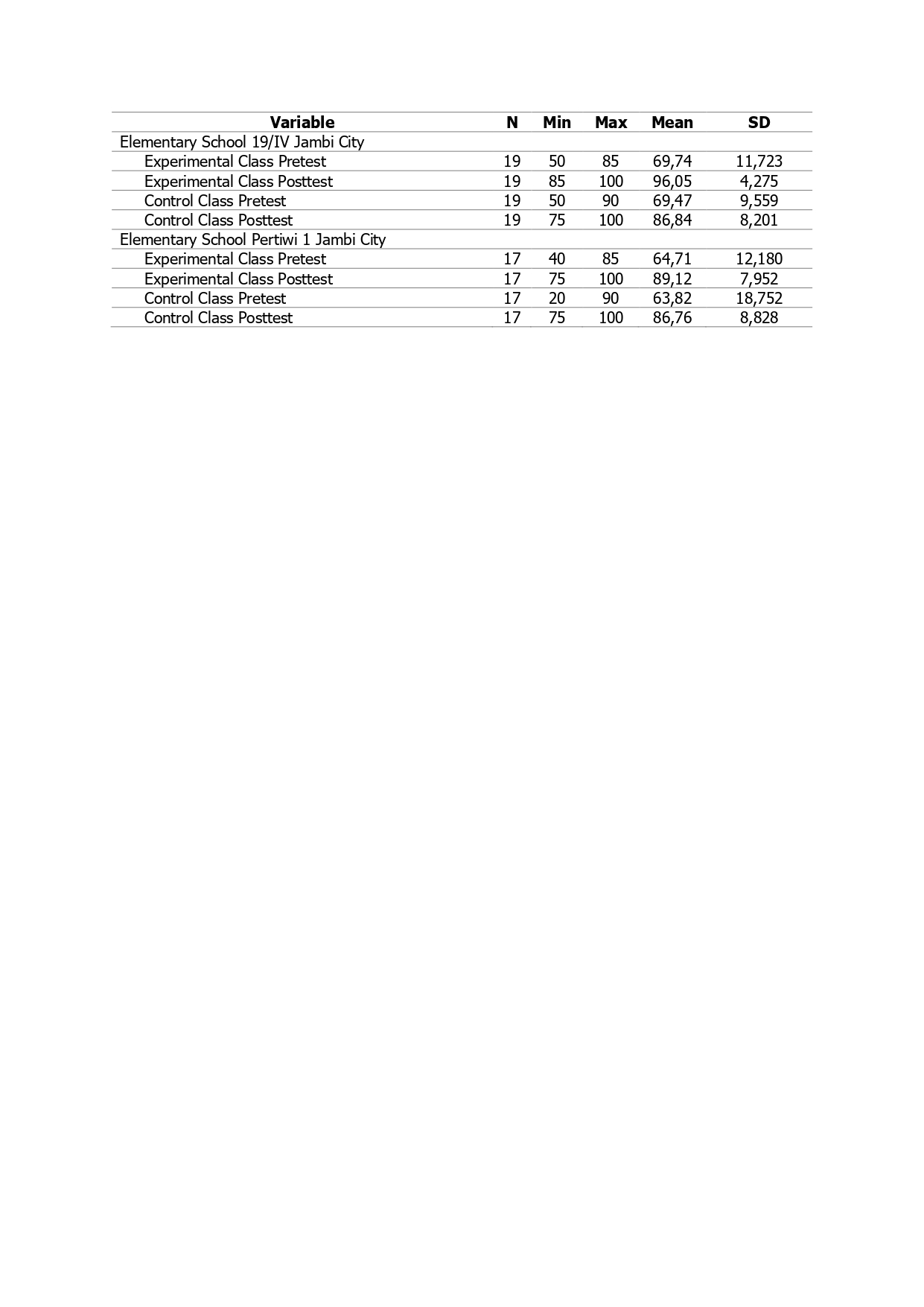
This study aims to analyze the effectiveness of using flipbook-based e-textbooks on 21st-century skills (6C) and student learning outcomes in Phase B Social Studies at the elementary school level. The study employed a quantitative approach using a pretest–posttest control group quasi-experimental design. The research sample consisted of 72 fourth-grade students from two elementary schools in Jambi City, divided into an experimental group and a control group. Data collection was conducted through tests, observations, and documentation, while data analysis utilized descriptive statistics, prerequisite tests, the Independent Samples t-test, the Mann–Whitney U Test, and N-Gain. The results showed that the use of flipbook-based e-textbooks had a significant effect on the 6C skills simultaneously (Sig. = 0.000), with all aspects of the 6C skills showing a significant improvement. Furthermore, the learning outcomes of students in the experimental group were better than those in the control group, although the effectiveness varied across schools. This study concludes that flipbook-based e-textbooks effectively support the implementation of the Merdeka Curriculum by improving learning outcomes and developing students’ 6C skills in elementary schools.
Downloads
Published
Issue
Section
License
Copyright (c) 2026 Nadila Hardiyanti, Muhammad Sofwan, Ahmad Syarif

This work is licensed under a Creative Commons Attribution 4.0 International License.